Die Keynote Lectures der DOG bieten wertvolle Einblicke in aktuelle Entwicklungen der Augenheilkunde. Renommierte internationale Experten präsentieren in kompakten halbstündigen Vorträgen wichtige Themen und Innovationen. Weitere Informationen zu den Rednern und ihren Vorträgen finden Sie hier.
Keynote Lecture
Donnerstag, 24.09.2026, 11:45-12:15
Auditorium von Graefe
Home Monitoring: From idea to clinical use
Anat Loewenstein (Tel Aviv, IL)
The presentation will discuss the development and impact of home-based optical coherence tomography. Technology, clinical applications, and healthcare delivery model will be shared. We will discuss how development of such a service can serve as a blueprint for other digital health patient centric solutions.

Keynote Lecture
Freitag, 25.09.2026, 11:45-12:15
Auditorium von Graefe
Vision Restoration with the PRIMA Implant: what’s next?
Yannick Le Mer (Paris, F)
Age-related macular degeneration (AMD) with geographic atrophy (GA) causes irreversible vision loss and no therapies exist to restore visual function in this population. This study evaluates the safety and efficacy of the PRIMA system to restore vision in patients with severe vision loss due to GA. The PRIMA system employs a subretinal photovoltaic wireless implant with augmented reality glasses that project near-infrared light on it, thereby restoring input to second order neurons. On the 38 patients included in a prospective study, the PRIMA system successfully restored central vision in participants with AMD-related GA, demonstrating statistically significant and clinically meaningful VA improvements at 12 months post-implantation with consistent treatment effects across patient subgroups.
Keynote Lecture
Freitag, 25.09.2026, 16:45-18:00
Raum I
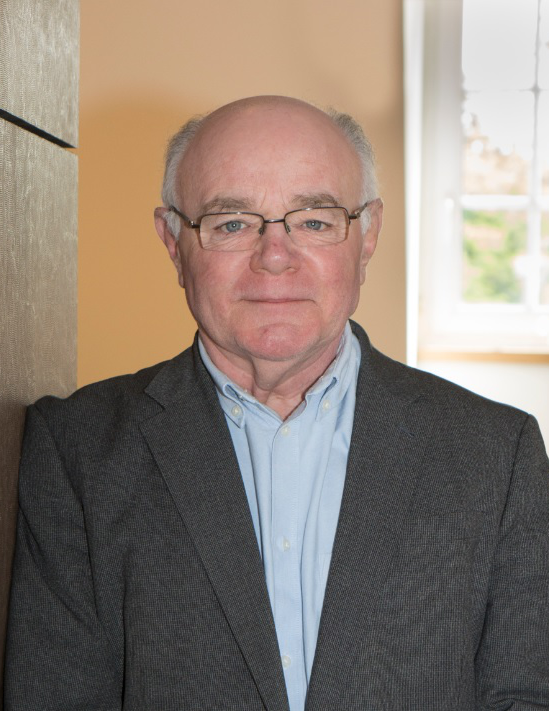
Albrecht von Graefe Memorial Lecture
Alan C. Bird (London, I)

Keynote Lecture
Samstag, 26.09.2026, 11:45-12:15
Raum I
Augenheilkunde ohne Grenzen – mit digitaler Ophthalmologie in die Zukunft?
Heinrich Heimann (Liverpool, UK)
Die zunehmende Digitalisierung der Medizin verändert die Art und Weise, wie wir Augenheilkunde praktizieren. In Großbritannien ist die digitale Ophthalmologie seit Jahren fester Bestandteil der Behandlungsroutine, mit teilweise dramatischen Verbesserungen der Diagnostik, Prävention, Behandlung, Patientenzufriedenheit und klinischen Forschung. Im Ländervergleich wird dargestellt, welche Veränderungen auch in Deutschland in naher Zukunft zu erwarten und welche Hindernisse dabei zu überwinden sind.